Sunday, May 6, 2018

Spring Gardening

When I was a kid, for quite a while whenever I was asked what I wanted to do I said I wanted to be a farmer. My parents told me what hard work it was but that didn't deter me. As it turns out, however, the realities of being a farmer are not at all what I wanted. I didn't really want to be a farmer, I just wanted to grow my own food. Though I wouldn't hear the term for quite a while longer, when I said I wanted to be a farmer what I meant was more along the lines of being a modern homesteader.

I don't actually consider myself a homesteader (is there a hard line on that, and if so what is it?) but I want to be more than just 'a gardener'. I've mentioned before that I'm trying to maximize efficient food production of my property, thinking over the long term. I've had gardens in the past but they were always kind of pathetic. We lived in an apartment, and then in my parents' house, so the garden space was never really mine. Sure, I could do what I wanted. But why would I want to spend so much time and effort to maintain someone else's yard?

This year, however, is different. One of the attractions of this house is that it had garden beds already put in for me. Not great, not what I ultimately want, but they're there and I can work with them. Six lovely raised beds. One even has trellises in place for peas and beans.

I planted a few crops last fall, mostly as an experiment to see what would grow over the winter and how well. Carrots, onions, lettuce, and spinach went in. Not all of it germinated, not even close. I had intended to make some low tunnels but pregnancy lethargy struck and it never happened. I'm still happy with what did grow, however. Spinach and lettuce both did pretty well, although it got incredibly bitter when the temperature dropped below freezing. I didn't mind so much as I don't crave salads in winter. That's soup season! Still, it was enough to gather a little bit occasionally, and now that it's spring the lettuce is getting sweeter and going gangbusters when most other people are just seeing the first few big leaves. It's enough that we've had some big salads where all of the greens were from the garden, plus lettuce for tacos and other meals. I've got so much I've been considering offering some up to my Buy Nothing group.
Not even all of my lettuce. I pick leaves
off the sides and it just keeps putting out more.

The carrots I started in the fall are also starting to get big. I'd been warned that carrots would grow, and they'd be nice and sweet thanks to all the cold weather over the winter, but they wouldn't get beyond baby carrot size. However, leaving them to grow means that now they're growing fairly well and should be ready to pick soon, well before spring-sown carrots have even put out their first true leaves in most cases.

The onions didn't germinate in the fall, probably because it was already too cold when I direct sowed them, but a few are popping up now. For this summer I got onion sets rather than seeds to grow from, and I expect I'll get a healthy crop of onions since they're already popping out of the ground. If all of them grow, I should have very close to 100 yellow onions and 100 red onions. Yes, we eat a lot of onions.

Since six raised beds still gives me limited growing space I transplanted the strawberries the previous owners had planted in one bed, plus a few from my mom's house, out front. They scorched last summer in the raised bed so I put them in an area that gets lots of sunlight but also some shade. Since onions can act as a pest deterrent, and they get along pretty well with strawberries, I inter-planted some of them among the strawberries. Soon I'll add a summer crop of lettuce and spinach, choosing the shadier spots so that they don't bolt quite as fast as they would in full sun. Or, that's the hope.
Carrots and lettuce!

Instead of buying plants, I generally buy and start my plants from seeds. This can be rather hit or miss, since sometimes a packet of seeds just won't grow well and there's a lot that can go wrong even if you have great seeds. This year I bought some seed starting pods in trays to make things easy on myself. It was a good decision, and most of my seeds germinated. I didn't actually expect them to do so well so, uh, I ended up with way too many seedlings. Oops? Knowing that I didn't have enough space for even half of my plants the only logical thing to do was...build more garden beds.

I had a raised bed that I'd made out of pallets with my dad last year. My brother brought it over for me and putting it back together was bittersweet, since it was the last project I'd done with my dad. It's really just a pile of free wood and screws leftover from other projects, but it means a lot to me. It's quite deep and will make an excellent tomato bed, since tomatoes have deep roots that need space, and I left three of the sides tall so the tomatoes won't even require a lot of cages.

The vegetables I'm planting vary from year to year but I try to get the ones we eat the most and deliver the best return on my investment. This year I'm (hopefully) growing tomatoes, cabbage, green and purple string beans, shelling and sugar snap peas, butternut squash, carrots, lettuce, spinach, onions, celery, broccoli, potatoes, red and orange bell peppers, and Anaheim peppers. I might buy a zucchini start as well, or I might just get zucchini from friends when they inevitably declare zucchini overload.

For fruit I have quite a few strawberries, two (so far) new blueberry bushes, the cherry tree, and a rhubarb. (Is that a fruit? Whatever, we treat it like fruit.) I'm not expecting much fruit this year, since they take a while to get going. The cherry tree put out a grand total of nine blossoms and I would be seriously surprised if any of those translated into cherries. The blueberry bushes similarly won't produce much in the beginning, and rhubarb can't be harvested for at least the first year. But they're all perennials, so I'm not concerned.

I also have a few herbs. Thyme, rosemary and mint were already planted in the raised beds. Unfortunately, the mint was planted NOT in a container so now it's trying to take over everything. (Always plant mint in a pot here.) I bought basil, hoping that this will be the year I finally manage to grow amazing basil, as well as lemon balm and chamomile. I can grow my own teas! (Tisanes, technically.) The lemon balm, as a member of the mint family, has been planted in a pot so that it, too, does not begin to take over my yard. I may also add sage into the mix, but am content with what I have for now. I want to build an herb spiral but that will most likely be a project for next year.

The best of plans

Garden planning is really challenging work beyond just time, space, and money. It requires that I think in multiple dimensions. I don't want root crops right next to each other because then they'll be vying for the same space. Something should go between, hopefully. Similarly, I don't want to plant tall tomatoes in front of lower plants and shade them out. And will the squash vines crowd out the other plants?
Spring peas

Then there's the matter of nutrients. Will everything I'm planting together be good neighbors? Or will they be stealing nutrients from each other so that none of them grow really well? And soil requirements too! Blueberries only grow in very acidic soil, so what would go well with them? And how do I ensure the soil is acid enough?

As if that wasn't enough, you're not supposed to plant any crop in the same bed all the time because diseases can fester in the soil from one year to the next. If you don't give them their favorite plants to eat they'll go away, but it takes time. So crop rotation needs to be practiced and this needs to be done anew every year. Maybe someday I'll get my garden on a regular rotation but I honestly don't know of any gardeners who don't tinker from year to year, trying to make everything better.

When to plant different crops is yet another factor that requires careful planning. I love this website for all things gardening in the maritime Northwest. Not that I always follow it. I planted my winter squash seeds right along with everything else in March and then looked at April's to-dos and saw that I should have waited until mid-month. Oops. No harm done, though, and the seedlings are transplanted out. Two withered almost immediately but the rest are thriving, putting out new leaves after only a couple of days. It helps that we've had quite a few sunny, warm days recently.

What my garden plan looks like so far is this: three beds of mixed carrots, onions, spinach, and lettuce. One of those beds has the thyme and rosemary (and mint, but that's all over the place now). I have one bed of onions, broccoli, leeks, and cabbage. One bed has beans, squash, and peas. Two beds will have celery and tomatoes (which can't be planted out yet), and in the two beds I have yet to make I will have one potatoes + cabbage (+ beans?) bed, one broccoli + leeks. I also have two large planting buckets with potatoes.
Bucket of 'taters.

In the very front, along the fence, my wonderful spouse built two new raised beds. Those will be my blueberry beds, with rhubarb and (for this year at least) peppers. Since it's facing the sidewalk and I want it to be pretty I'm going to add gladiolus, tulip, and daffodil bulbs. (Tulips and daffodils can't be planted until the fall.) And my chamomile is planted under the cherry tree.

I'm currently in the process of setting up  some of the low tunnels I wanted to make in the fall but didn't. We don't have anywhere very good to set seedlings, nowhere for them to get enough light, without it being a total pain in the butt. However, celery and tomatoes still need more warmth at night than nature will provide. Enter the low tunnel. I bought ten foot lengths of PVC pipe, some brackets, and clamps to help hold the plastic down in the wind. The plastic I'm using for now is leftover painter's plastic, which we bought when HusbandX was removing the asbestos ceiling downstairs. It's very light and thin so it's not the greatest, but it does let a lot of light in. It will also contain moisture, so I won't have to water those beds as much at night until the plastic comes off completely. (It gets opened on sunny, hot days right now so that the seedlings don't scorch.) Since it's so thin, for now I've got a few water jugs in with the plants to act as thermal mass. They absorb the daylight heat and then throw it off at night, which should help keep the temperature swings to a minimum. Seems to be working well enough so far. The first bed I did this in, the one with celery and tomatoes, also gets the most sunlight each day, to maximize the amount of warmth and light these heat-loving crops get.
One completed low tunnel, with some of my starts.
I have clamps to hold down the plastic when it's windy.

Before autumn comes I plan to have at least two other beds with low tunnels over them, to keep plants going a bit longer in the autumn and to give fall-started plants a running start.

Weeds, weeds, and more weeds

All this and I haven't done any major landscaping. Phew. I know that what I have isn't going to be a permanent setup. What we have in the back is going to eventually be re-done, not least because we have bindweed under almost all of the beds. It's awful, and I'm already sick of pulling it out of my raised beds. It grows super fast so if I miss even a day of weeding I come back to dozens of new shoots popping up. It cares nothing for the ground cloth the previous owners put under the raised beds. You know the scene in Stranger Things when Hopper goes underground and finds out how extensive that creepy plant is? That's exactly what it's like to find bindweed in your garden. I moved all of the dirt in one of the beds around to dig up as much of the bindweed as I could, pulling up the ground cloth to get the roots, and it just keeps coming back. You pull on one tiny sprout and find a four-foot root that attaches to several other sprouts, which leads to even more roots and more sprouts. Ugh. The same corner where the bindweed flourishes also has blackberries and English ivy, all invasive and annoying as hell. I'm not sure that anything can get rid of these weeds except perhaps chickens, but my spouse has nixed that idea. For now. (Probably wise.)

In the meantime, to combat this and other weed problems, in the new beds I'm making a half-assed attempt at lasagna/hugelkultur beds. I laid down cardboard, then sticks, then a bit of unfinished compost or charred logs from backyard fires with friends, then the finished compost/soil mixture I bought. (It ended up being $30 for two yards, thanks to a friend with a senior discount and a truck. That's roughly 2 tons of compost, for those who don't understand the yardage system.) The sticks (brush we cleared because it was massively overgrown) will decompose very slowly, replenishing nutrients over a long time, while the unfinished compost will break down very quickly to add lots of nutrients from the start. We'll see how it goes but I've had good luck with even my half-assed attempts in the past. The bindweed has been growing around the newest bed but not up through it (yet) so that is promising.
Baby butternut squash

One of the best ways to combat weeds is to crowd them out by planting a variety of things. In permaculture there is the idea of building more like a forest canopy, with many levels. ("Guilds".) Big trees, smaller trees, large shrubs and bushes, smaller ones, plants, ground cover, root crops. If I have a big item, what can I plant around it as ground cover to keep weeds away? Can it do anything else for the plants around it, like attract beneficial insects or draw up nutrients from the soil? My knowledge of this is still in its infancy but I'm trying to incorporate it whenever I can. I'd rather not spend all of my time in the garden constantly weeding when I can get other plants to do some of the work for me.

Since I'm not a farmer, I also don't have to obey the same rules. I don't need to plant everything in a straight line because it's not going to be harvested by machine. If it makes sense to plant a few onions around a lettuce plant, or to put one cabbage in the middle of my broccoli because that's where it fits, I can do that. I'm not constrained in the same ways so I can maximize my use of space to make it more efficient and to help keep weeds out. #winning

More than a garden, more than a yard

As I move forward with planning out my yard and my Perfect Garden I'm trying to think of it more as an ecosystem than anything else. I want to grow as much of my own food as I can, yes, but to do that requires more than just plants and soil and light and water. I also need insects to act as pollinators and defenders. It's a certain thing in the NW that slugs will come after my plants, and I want to attract things that will take care of them for me. If I want to attract pollinators that means I need to have a healthy mix of non-food-producing flowers as well, hence the bulbs I'm going to plant along with my blueberries. But plants aren't the only thing, either. I want to have a few bee houses around, and at some point we will likely have honeybees. My brother-in-law gave us his beehives, and all I need to do is get over my fear of bee stings first. Maybe take a class about beekeeping....
This lilac is one of my favorite plants that came with
the house. Visible right outside the dining room, it attracts
lots of birds and bees, plus it both smells and looks lovely.

If I'm attracting insects then I'm also attracting birds. And this is a wonderful thing! Birds will also help eat the bugs I don't want (mosquitoes) and can act as pollinators. I'm not going to be setting out bird feeders, as they can introduce invasive plants or spread weeds and help invasive birds. If I plant bird-attracting foliage, however, it will help the local species. I'm conscious of what in and around our yard is attractive to birds, particularly hummingbirds. We saw quite a few last summer and fall and I want to keep seeing them.

It's not a project for this year but I want to get a bat house or two. Bats are just sort of awesome to watch, and they eat mosquitoes. Plus, their poop can be used as yet another wonderful natural fertilizer for the garden.

When we moved down from Alaska I mourned the fact that I wouldn't get to see as much wildlife. And it's true, I don't. When I do it's certainly not as big or quite as wild. But it is there. When I went to my book club recently, in a busy neighborhood around dinnertime, as I was getting the baby out of the car I heard a noise and looked up to see a coyote racing away. It was surprising but also sort of heartening, in a way. I want to live in a place where wildlife is still intertwined with humanity. I want to know that we haven't driven it all out, and in fact I want to draw more of it in. I do draw the line (ants in the house are no good, Seattle rats can go to hell) but having a variety of animals and insects is overall a good thing.
Leaving some spaces wild, with native plants,
is a good thing. It can be beautiful too.

Do it for the children!

As annoying as it can be, I'm also trying to incorporate my children in the gardening process as much as I can. The Munchkin helped me plant seeds (especially the peas and squash) and they've both been coming outside with me as I work in the garden. The day we got the compost was a banner day for our older girl, who had a blast playing in the dirt. ("Helping.") There's only so much I want a four-year-old to do--only so much she can do--and even some of that has had me gritting my teeth. However, watching the process of plants growing is not only fascinating and a great learning experience, it also helps kids eat better. I'll take a few crushed seedlings to have a kid who enjoys vegetables, thanks.

More than trying to help, my Munchkin spends her time in the garden observing things. She had a "pet" pill bug the other day and it's a treat to find worms or caterpillars. I have a minor internal panic attack every time she picks up a spider but I'm trying not to show her that. We discuss what these bugs eat and what they do, we talk about the birds that eat the bugs. Having a kid who enjoys being out in nature means having a kid who will want to take care of it. That is priceless.

Why bother?

When I started writing this post it was just starting to come out that a bunch of romaine lettuce was infected with e. coli. This has since turned deadly. (If you haven't heard about this yet, throw out your romaine lettuce.) Sadly, this sort of thing has become normal in our food chain. Every year there are dozens of outbreaks of illness which can be traced back to a breakdown of the food system as a whole. Frequently, as it now has with this latest outbreak, these illnesses turn deadly. I'd rather not risk death for my family with every bite. And no food, it seems, is safe.
Enough salad for six adults and a preschooler.
I hardly made a dent in the garden.
Salad: 3 types of lettuce, goat cheese, and dried apricots.

Then there's the fact that homegrown food not only tastes better, it also has more nutrients. The food we grow at home is just better for us than what we can buy at a supermarket. I've wondered many times if the obesity epidemic is caused as much by nutritionally deficient food as it is by anything else. I don't believe that a whole nation of people suddenly decided to gorge themselves into ill-health and that it's a moral or self-control issue. When you have people who are simultaneously malnourished and overweight, the problem is not with them but with their food. More likely, people are eating more because their bodies are demanding more real sustenance than they're getting from the crappy food.

I don't just blame the over-processing of food, however, but the fruits and vegetables which have been bred to travel long distances, rather than for taste or nutrition. I've been purchasing more heirloom varieties of seeds and every variety I've tried so far has been one worth keeping. You can't get them at big box stores, however, because there's not as much profit to be made. And that, right there, is the essence of the problem with food in this country. It's not sustenance, it's a product. This is what we all need to live, yet companies are throwing out patents for ingredients, processes, even the DNA. Everyone's looking for how they can get you to stuff yourself even more, to eat yourself to death so they can make a buck. It's stupid, crazy, and sickening. I want no part of it when I stop to think about it.
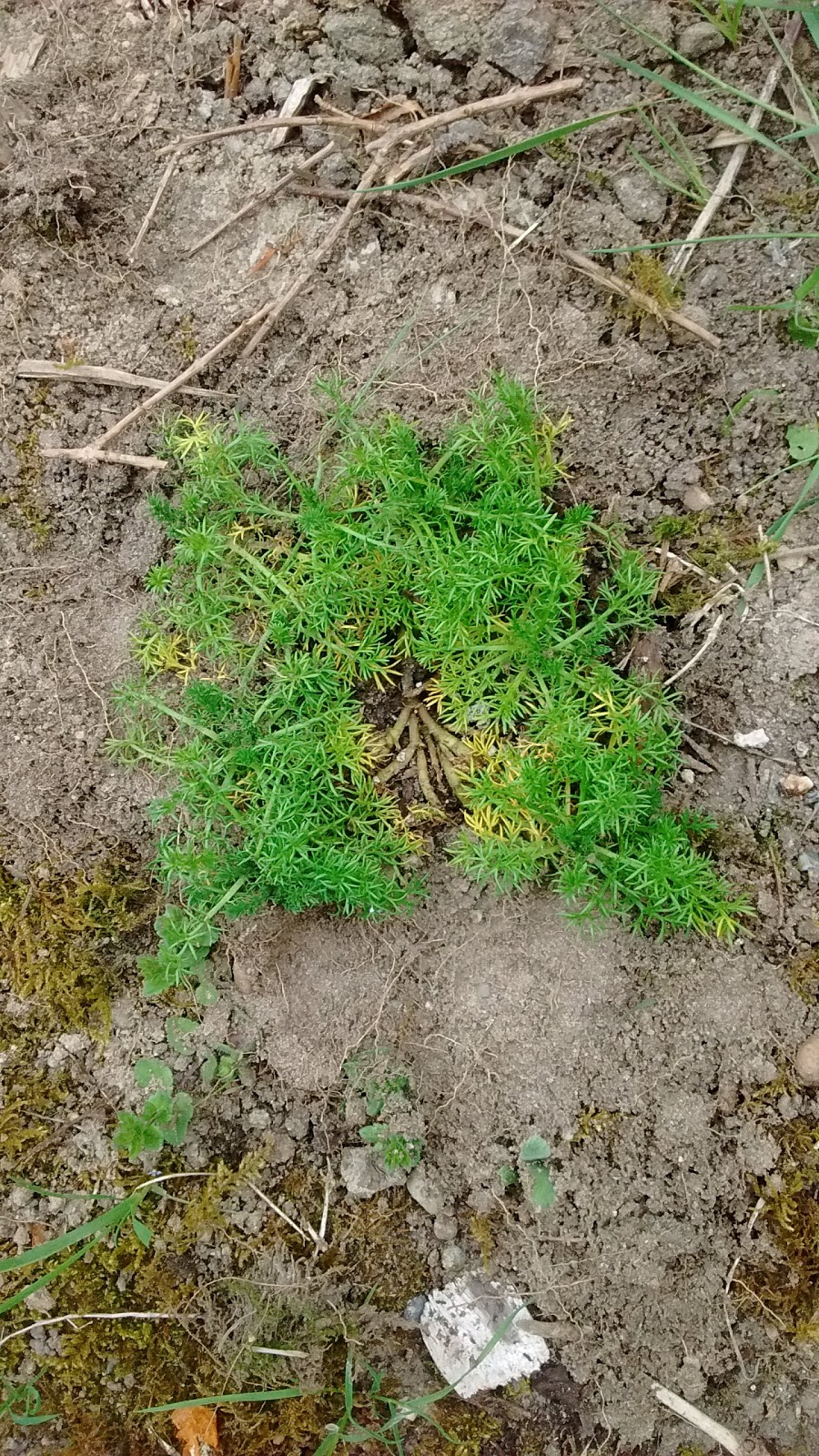
Chamomile under my cherry tree.
Spread, baby!
When I garden I also get to control what goes on my food, and growing organically at home is often cheaper because you're just not buying and using pesticides or strange fertilizers. I use compost, which can be made for essentially no cost and bought for very little if sourced by the yard, and that's about all you need for most plants if you also use crop rotation and companion planting.* The startup costs of a garden can be somewhat steep depending on how you do it but the payoff is forever.

My long-term goal is to have most of our yearly vegetable intake, and quite a bit of our fruit intake, come from our garden. Maybe one day I'll even talk my spouse into letting me keep chickens, to further close the loop (chickens eat kitchen scraps, poop out fertilizer, and they make breakfast!) and to produce even more of our food. (Will that be the point at which I cross the line into homesteader territory?) This all seems like an arbitrary goal and in some ways it is. I'm not measuring my veggies by weight, as some people have done, to see how many pounds of produce I can grow. I'm not even writing it down. I am trying to eat at least a little something from the garden each day now that it's producing so much. (Mostly lettuce still but yesterday the Munchkin and I shared a carrot.) Depending on how my chamomile and lemon balm grow and how the low tunnels do and how much I'm able to preserve, I might even be able to extend this goal to the entire year. That would be amazing. But for now, I'm content with a carrot or a salad here and there and I'll see where the summer takes me. I've got many more years of gardening ahead, during which I know I'll get better and grow more.

Finally...

I don't think I have a 'green thumb'. I have so much enthusiasm for growing things until the point at which I don't. Or, I get scattered and lose sight of something crucial. For instance, my new lavender plant is in the kitchen reviving. I got so into making the low tunnels and digging out the bindweed that I forgot about the lavender. Unplanted, it scorched in the hot weather we've been having. It looks like it will survive (pro tip: set wilted plants in a pan of water so it soaks up through the roots--far more efficient than top-down watering) but if I hadn't noticed it until tomorrow it would have been a goner. I'm sure I'll lose a few plants this summer due to neglect. What I know is not intuitive, it's thanks to extensive reading about gardening, farming, and homesteading. That is, I read everything I can about those who know more and do better than I likely ever will. It is despite myself that I manage to make the garden worthwhile, and still it's enjoyable. It forces me outside and it's relaxing. No wonder gardeners live longer.


*My blueberries have special fertilizer to enhance the soil's acidity. However, I'm also looking at natural ways of doing so. Adding coffee grounds, pine needles, peat, and even putting a tablespoon or two of white vinegar in a full watering can are all ways to help acidify the soil.

Saturday, April 21, 2018

Another goodbye

Nearly fifteen years ago, I went just to look at a litter of puppies. Cocker spaniel puppies. Of course as my mom, my younger brother, and I all trooped off my dad was there saying, "Sure. To look. That's what will happen."

One of the puppies caught me, because of course one would. As my dad well knew, there was no way we could go look at puppies without bringing one home. From that first snuggle, when she put her head on my shoulder and sighed contentedly, she was my dog and I was her person. The little black and white sweetheart came home with me that day. It was, frankly, stupid and irresponsible. If I'd truly thought it through I would have realized that my life was too chaotic for a puppy. I was twenty-one years old and had no idea what I wanted to do in the future, or where life would take me. I ended up moving several times, sometimes without being able to take her with me. My parents, who by that time loved her as much as I did, took care of her for me when I couldn't be around. Through it all, though, she's been my dog and I've been her person.
"I'm beautiful."

Over fourteen years later and bringing her into my life is one of the best things that has ever happened to me. It ranks right up there with meeting my spouse. When HusbandX and I decided to move in together, in Alaska, I told him that I would be bringing my dog up to (finally) live with me. He said okay, but I could tell that he wasn't excited about the idea. He said, several times, that he wasn't going to be responsible for her. She was my dog, not his.

And then they met. It was pretty much love at first sight. He'd been dreading a small dog with yappy tendencies and a hyperactive need to be in your face at all times. Instead, he got a laid back dog who loved walks and runs but was also content to just sit on the couch, encroaching on the space of whoever was there with her. I'm not going to lie, she could be pretty barky too, but generally for good reasons.
"Dignity. Always, dignity."

The joy she's brought to our lives is indescribable. So many of our favorite stories and moments are about or with her. There was the time she knocked down an entire pan of gingerbread and ate it, then spent the entire next day groaning and wheezing in pain. There was the time she confronted a moose outside of our dry cabin, tail wagging as she went to meet this strange new creature while I quietly had a panic attack on the front porch and tried to whisper-shout her back to safety, thinking that surely the moose would just stomp her to death. It snorted and she ran, yelping, back to safety. After that, we could always tell when there was a moose in the woods because she would run up and down the driveway barking, but never venturing close to the strange, scary beasts.

There was the Halloween that she had minor surgery and, drugged up, fell off the couch, barking strangely, as she realized trick-or-treaters were there just after they'd left. Every time someone came to the door we repeated this routine. She still insisted on getting back up on the couch. There was the time HusbandX was throwing leftover noodles to her and one got stuck to the hair on her back, so she spent 15 minutes doggedly sniffing around the kitchen looking for it, tail wagging, as we laughed until it hurt, intermittently throwing more noodles on her back. We finally had to pull them off and feed them to her because she would have looked for them forever. There was the time HusbandX took her to the groomers and asked them to shave her everywhere but keep her mutton chops. (They were glorious.)

She had a taste for cat poop, which we discovered only after we got our cat. She seemed to think he pooped out treats covered in pee-flavored sprinkles just for her. She also never seemed to want to lick anyone unless she had cat poop breath.
"You wish you could grow 'chops like these."

She has also been the best family dog we could have asked for. She knew I was pregnant the first time before I did, sitting and staring at me rather creepily until I figured out what was going on. Initially highly jealous of the baby, she settled down fairly quickly for a senior dog. I felt that it was a little unfair to throw a baby into the mix when she was so old but she took to her role as Babushka Dog amazingly well. She even challenged my mother-in-law, growling and barking fiercely, when she thought my mother-in-law had abandoned her baby somewhere. Then we put a second baby into the mix and she was nothing but protective and loving with the new little one. She snuggled the baby when the baby cried, she slept next to her whenever possible. After a bath, the dog ran around rubbing herself on the baby's stuff so that she'd smell like the baby, not herself. She let the baby tangle fingers in her hair and didn't even move when the baby flailed tiny fists at her face.

Despite more provocation than any dog should ever have to put up with, she has never snapped or growled or otherwise rebuked our kids. For the past couple of years she's had arthritis that has steadily gotten worse, to the point that we knew she was in a lot of pain even with a narcotic. Her joints have stiffened up and mobility has gotten worse. Still, she didn't utter a word of protest as a rambunctious toddler and now preschooler occasionally fell on her or dropped things on her. I've had many other dogs in my life and this one is, hands down, the best and most understanding of them all. She's earned her place in the doggy Hall of Fame.
"Dis is my baby, guys. I snuggles it."

This dog has also helped me through some of the lowest points in my life, including my dad's death. Her quiet snuggly support, her unwavering devotion and love, has been incredible. I realize that many dogs do this but, in my experience, rarely to this extent. She helped me understand empathy better simply by being herself.

Which makes it all the harder that she can't help us through this final transition, this last goodbye. The cruelest part of loving a dog is that they don't live nearly as long as we do. We've seen her aging--getting mostly blinded by cataracts, going deaf, cysts and tumors growing that hamper her movement even as arthritis makes everything more painful. It's been tough to watch. In many ways, she's handled it more gracefully than we have. For the last year HusbandX and I have watched her at various times to make sure she's still breathing. I've woken up in a panic at night thinking that I couldn't hear her breath, only calming down when she rolls over or snorts and snores. I've even wondered if she's hanging on for our sake, rather than her own. Does she feel like she's abandoning us?

She started having lots of accidents in the house this past summer and we thought that it was the protest of an old lady because so much was changing--we were going back and forth between houses and she clearly knew I was growing another baby. More chaos into an old dog's life. However, when we fully moved into our new house the accidents continued. We realized that we had to take her outside once every couple of hours or she just couldn't hold it anymore. She was trying her best. But there were clearly digestive and urinary issues she was dealing with, which were just because of age. And, she needed someone to actually carry her out because she couldn't get up and down the steps herself.

We began to prepare the Munchkin. Most of her memories of the dog involve us calling her Old Lady, so it wasn't a surprise to her when we pointed out that, yes, our dog is old for a dog. We talked about how when creatures get old they sometimes get sick, and that's what was happening to our Babushka. We even talked about death. That's been a big topic of conversation at our house this year anyway, but laying the groundwork for our kiddo to be okay with losing her dog, the one that helped her learn to walk, was as hard a conversation as any we've had with her. Her third word was "doggy", which in the beginning she mostly deployed as she was dropping food for the dog and giggling.

Still we waited. Our dog was in pain and mostly blind and mostly deaf and kind of incontinent but she wasn't sick. Was it really time? She still had a bit of that spark, those brief moments when her personality was stronger than old age and she seemed like her younger self. That means she's okay, right? Besides, we were both hoping that she would gracefully bow out on her own. Just go to sleep one night and that would be that, because the best of dogs deserves an easy and peaceful passing.

"I stepped in paint and ran all
over the porch so that you'll
always have my paw prints."
In October, she had what we think might have been a small stroke. Her head compulsively ticked to the side over and over again as we were snuggled on the couch watching "Stranger Things". She looked terrified, and so were we. However, as time went on and she showed no recurrence, we went into a holding pattern of waiting and watching. We couldn't bear to say goodbye just yet, especially when she wasn't actively sick. She was just...old. She didn't show signs of another stroke (or seizure?) but she had two long periods of illness. We almost put her down but pushed it off just long enough that she got better again. I mean, as better as an old dog can get. Her baseline was always a bit worse after.

She started refusing her arthritis medicine. It hadn't been doing much anyway other than making her sick to her stomach. Even with the medicine she'd had trouble standing up from the wood floors, and she was stiff when she did so. She could barely walk at times. She would fall over frequently, either tripping over things or just because, and she sometimes paced because she was in pain. The worst, though, was the heaviness. After her illness around New Year's, she got this heaviness when she laid down, as if she didn't want to have to get back up again. In bed she would rest on my legs and trying to move them wouldn't startle her or get the push-back she used to give, she would just be limp and heavy. She didn't care what I did to her as long as she didn't have to move herself.

"Don't worry, she won't go anywhere. I gots her."
We finally decided that her time had come. It was not an easy decision and we were (are) both conflicted about it. She has been, at various times and sometimes all at once, our nanny, our cleaning crew, our therapist, a thief, our comedian, our entertainment, our biggest source of aggravation, our comfort, and always our best friend. Contemplating ending her life felt so wrong, even for good reasons. However, her bad days had begun to outnumber the good and we couldn't ignore that. She hadn't been able to go for a walk for over a year now, and even food had lost some of its appeal. We also didn't want her to get sick again and have to do this in a hurry, or watch her waste away to a withered and wretched ending. She deserved better than that.

We gave her two last wonderful weeks, taking pictures of her with the kids and feeding her home-canned salmon with rice for dinner. We spoiled her with snuggles and back scratches. I took her to preschool pickup and let her meet all the kids, who doted on her. And during these weeks, we've been watching her, hoping that it wouldn't come to the vet visit. We were hoping she would gracefully exit on her own. With all the love and attention she actually perked up and we tried to talk ourselves out of it yet again, but holding her and feeling how bony she was let us know that we were just deluding ourselves. So I found a mobile vet who would do a house call. We wanted her where she felt most comfortable, where she could be surrounded by familiar scents and her people.
"It's okay, she can jump here
and I'll just keep napping."

Our Munchkin was treating it all as a game. "It's okay, we can get a new dog!" It was frustrating and demoralizing, even though we knew that she couldn't possibly understand. We had my younger brother come to take her to the playground before the vet got here. It took a while (the dog ended up getting the sedative dose of a 140 lb. dog, though she was only about 23 lbs at this point) so they walked around after the playground, then listened to music in his car as we said our final goodbyes.

We weren't going to let the Munchkin see the body. HusbandX had come home early from work and dug a grave in the backyard while I did preschool pickup. However, the Munchkin was insistent. We both felt that maybe it would make the whole thing seem real at last, and she would understand. As preparation I explained burial, that when a spirit is gone we return the body to the earth, and she accepted that. Then we showed her the body. "When will she wake up?" We explained that she's really gone, that what made her herself was gone, and that was when she finally got it. She wailed so loud and so hard that one of the neighbors, a dog owner also, came out to see what was up.

The Munchkin insisted that she help bury our Old Lady. I don't know if she'd ever been introduced to the idea of burial before (my dad was cremated) but she immediately understood the concept, asking for a little shovel of her own. HusbandX had put apple blossoms in the grave, and he and I lowered her down together. Then we gave the Munchkin a trowel and we grabbed our shovels and, all crying together, we buried our dog.

Of course, four-year-old spirits can't be repressed. Sobbing and wailing she was crying, "Bye-bye! Bye-bye, Pepper! I love you--waaaaaah! Oh look! It's a w-w-worm! I want to *sob sob* put it in there. Waaaaaah! Bye-bye Pepper! Daddy, *sob* aren't you going to--waaah--help?" I was both crying and laughing as we did the hard task of entombing one of the best creatures I have ever known.

I have some bricks that I was going to use to make a small flower bed, but now we're going to have the Munchkin paint a few as a grave marker. I'll plant some perennial flowers over her, so that no one can be gloomy when we look at that corner of the yard.

We'll get another dog at some point, because there's a big gaping hole in our lives now that can only be filled by a dog.  Anyone who's ever owned a dog knows there's something incredible and special. We do not deserve our dogs, creatures with the purest hearts. So we will get another dog, but we will never forget or stop missing the dog who helped us become a family.


"Later guys, it has been a wild time."
Addition from HusbandX:
Your departure has left me shattered and I can't figure out how to put myself back together. When it all started I didn't even want you, now I don't know how to continue without you.

Tuesday, April 10, 2018

It's not actually about the money

I have a little secret. I don't actually care about money. In fact, I hate it. Money has caused so much suffering in the world, from people literally killed over it to just the amount of stress it causes most of humanity. Money makes people greedy, and it blinds them to even the basics of being decent humans. It gives power to those who, frankly, don't deserve it. It rewards those who are the most immoral, those who are most willing to trade or do just about anything to get more money.

So why do I write about money, if I hate it so much? What actually motivates me? The simple answer is that in most cases, frugality is environmentalism. There's such a huge intersection between the two. However, the minute you start talking about the environment many people's eyes glaze over and their minds start wandering. No one wants to hear a self-righteous rant about how much good you're doing in the world. And frankly, I know I'm not doing a ton of good. I would never label myself an environmentalist because I suck. I and my family take a huge number of resources. We are by no means kind to the earth, in part because we have to exist within the framework of our society. A society dominated by the pursuit of money.

Even if I lived a truly environmentally friendly life, if I did everything right, there's still the fact that society at large doesn't seem to be changing any time soon. I understand that too. However, the fact that it is collective action that will make a difference gives me hope. Every person who starts making a difference impacts those around them and the difference spreads. If no one speaks out, then no one is working to make a difference. Do you want to live in the sort of society where no one is trying to make change for the better? Neither do I.

So here's a short list of the ways frugality and environmentalism intersect. I'm sure there are more, but these are just the ones I could think of during nap time.

Reducing Fossil Fuel Usage

This has got to be the number one way everyone can easily reduce their impact. I cannot speak highly enough about all the ways biking can improve your life, and mass transit, for all its downsides, is way better in almost every way than driving. Even when you and your kid are sitting next to two people who are so high that they can't sit upright, or the bus has been delayed because there's a fistfight going on (true stories), it beats the hassle of driving around dangerous assholes and, ugh, finding parking.

I know that many people will get huffy and declare that they have to drive because of their specific circumstances. I won't dispute that, since everyone knows their own situation. However, even if you have to drive there are plenty of ways to reduce the amount you drive. Batching errands, walking or biking when you can, working from home, and staying in rather than going out are all easy ways to reduce your driving. These things also save you time and reduce your personal exposure to car emissions. Here are a few ways less driving can improve your life in addition to reducing your personal emissions: less driving means less wear and tear on your vehicle, meaning less time and money spent on maintenance, and less time spent pumping gas. More time out of the car reduces the health impact of being in the car (do not underestimate that) and thus increases the amount of happy, healthy life you're likely to have. Stopping at the store when you're tired from a full day of work might seem like a hassle but it will save you more hassle later. It also reduces the amount of time you're willing to spend in the store, making it more likely that you'll stick with your list. (You do carry a list, right?)

But eliminating or reducing driving isn't the only way frugal people save on fossil fuel use. Turning down the heat in your house and turning off the air conditioner can save you some serious cash but they also reduce the amount of natural gas, coal, and oil that are used. The invention of stable, reliable heat and a way to cool things down are fantastic, but not at the expense of the stable climate we depend on. Heating or cooling yourself first is a very basic way to reduce the amount of heating and cooling you need for your home.

Since we live in a cool area, I don't know that we'll ever get air conditioning. I'd rather leave that for vulnerable places where air conditioning can mean life or death: hospitals and nursing homes. We can use other methods of cooling down, like getting outside into the shade, fans, cross-breezes, drinking cool liquids, cool showers and swimming, eating foods that don't require cooking, and retreating to the basement when it gets too hot. We can also use landscaping and curtains to make our house need less heating and cooling. In the winter we do the opposite, eating and drinking hot things, throwing on sweaters, cooking and baking, wrapping ourselves in cozy blankets and snuggling.

Of course, I'm not the only one who matters here. In my own household we have the heat debate. If it were just me, I'd have the winter heating set at 60F during the day and 55F at night. But it's not just me. My spouse thinks I'm insane and wants the house warm enough to be comfortable while wearing shorts all winter. We also have a renter, who has no control over how warm his living space is. We have a compromise that neither HusbandX or I are fully happy with, so we grumble to each other still, but it works. When it's just me and the kids at home the heat goes way down, and I turn it back up to 68F about half an hour before my husband comes home. What I've found most interesting about this is how the kids and I have adapted to the cold temps. When I turn the heat up in the evening the house starts to feel too warm. Acclimation isn't as difficult as it's made to seem, and forcing our bodies to get used to seasonal change probably isn't a bad thing, since that's what we evolved to do.


Reducing Food Expenditure and Waste

Reducing food waste not only helps your budget, it also reduces the amount of farmland needed and reduces the waste of packaging and fossil fuels spent to get the products to you. All the usual tips about eating leftovers or only cooking and buying as much as you will eat apply, but that only affects things on your end. One of the biggest sources of food waste in this country is actually at the farm level, since only certain products meet grocery store standards. Seeking out ways to source "seconds", or items that don't meet those standards, is both cheaper (because of no grocery store markup) and more environmentally friendly. I've had good luck with roadside stands, which frequently sell seconds. There's one near my mom's house that sells honeycrisp apples for $6 per 7 lb. bag. Farmer's markets are also better, because they don't have to meet the stringent grocery store standards. If you ask around, you might be able to find farmers willing to sell you the odd produce that they don't think most people would buy, and are happy to because it increases their profit margin. In my experience, kids especially love picking out the funny looking produce and eating it. It's like a little experiment for them--will this funny-looking strawberry taste like a normal strawberry? And getting them used to funky produce at young ages normalizes it.

In some areas there's a CSA called Imperfect Produce that I've heard highly of from friends. We haven't tried it ourselves because I tend to like going to the farmer's market. I like the interaction and being able to stock up on things for canning or the freezer as they're in season. I'm also lucky enough to have a farmer's market nearby that's open year-round and there's a bus that takes me basically from door to door. But if the CSA model works for you, check out Imperfect Produce (or any other local CSA, if they're not in your area).

If those options aren't for you, people in Buy Nothing groups will sometimes offer up food. Leftovers that are going to go bad because someone's leaving town unexpectedly, an opened package that was discovered not to be to the person's taste, food gifts that the receiver knows won't get eaten. It all goes back to reducing food waste, but also helps neighbors by passing it along to someone who needs it or will put it to good use. Even if you don't want someone else's castoffs, offering your own potential food waste can help keep it from landfills and help your less food-secure neighbors.

Buying less (or no) meat can also be one of the biggest ways to reduce a household's food budget. We've experimented with the amount of meat we eat and have concluded that, for health reasons, meat needs to be part of our diets. However, reducing the meat we eat and eating from better sources when we do are the ways we reduce the environmental toll. Hunting can be sustainable, if done correctly. In some areas predators have been driven away so much that animals such as deer are overrunning the ecological limits and becoming a menace. Hunting means no factory farms, so you don't have to worry about what hormones are in the meat, antibiotic use, and a host of other issues that come with our current "farming" system.

Blueberries hardening off before I plant them.
Many frugal people have gardens, and for good reason. A lot can be grown for relatively little in startup costs, depending how you're going to do it. Even if it doesn't save you much money at times, the taste of homegrown food beats anything you can get at the store. Ever tried homegrown celery? The flavor is powerful, and helped me understand why it was ever cultivated in the first place. And if veggie growing isn't your thing, you can plant perennials that pay dividends for years, or even a lifetime. Even apartment dwellers can plant herbs in sunny windows or plants in pots on a balcony, and community gardens have exploded in popularity for good reason.

Foraging is another great way to save money and eat what would otherwise go to waste. It's amazing to me how much free food there is around. Blackberries, apples, and plums all grow in many places around my area and those are just the ones I know about. Amateur mycologists might know where morels and other edible mushrooms grow. In Alaska I foraged blueberries and cranberries every year. I've even grabbed dandelion greens to supplement salads when my garden isn't producing quite enough lettuce. (Though they're very bitter--best as a supplement rather than the main attraction.) It's sad how much produce just falls and rots on the ground. Don't let it go to waste, eat it!


Not Buying Stuff, and Sourcing Used Whenever Possible

I know quite a few people who've looked in their closets and, fed up, declared a clothes-buying ban. Most people's closets are so stuffed and so overrun with clothes that we could go for years without buying clothes without really noticing. I do know people who, mostly through health problems, have weights that fluctuate between several different sizes. In that case, keeping more than one size on hand can be the right and frugal choice. For many of us, however, there are clothes we own that haven't seen the light of day in many moons and likely never will again. Do yourself a favor and pass those along, either through your Buy Nothing group or to Goodwill. Then, stop shopping. Buying ban accomplished.

This can be done with any number of things. Do you really need the things you're buying, or do you just want them? This is important because everything we buy--everything--has an environmental toll. It's much harder to justify buying crap when you think about the entire life cycle of the item and the slow death of our planet that's caused by its creation and destruction. A new phone every couple of years can seem like a pretty asinine choice when looked at that way.

Inevitably, however, you will need things. Gearing up my older girl for outdoor preschool this year, we realized we needed a bunch of warm gear. Seattle might not get that cold in absolute terms, but being out in the rain and chill for four hours every morning can be tough on a tiny human. The school provided rain suits but the rest was up to us. I asked around on Buy Nothing for the winter gear we needed, then checked Goodwill, and those two sources provided everything we needed to outfit her. If she loses something (all her gloves) or gets something filthy and torn (every day) then I'm also not upset like I would be if I'd spent some serious money on her clothes. Best of all, it was easier to check those two places than shopping a bunch of different places and looking for deals would have been. Even looking online takes a massive amount of effort and frugality of my time is just as important as that of any other resource. As all those endless motivational posters tell you, you've only got one life. Do you really want to spend it shopping?

I'm saving myself even more time and money by setting aside what I can, what's not ruined, for my younger daughter. Reducing the amount that I have to seek out for both of my girls is effort well spent, since it means spending more time with them or, ya know, on the Holy Grail of any mom's desires, time to myself. As my younger daughter outgrows things I'm setting some aside for friends and the rest I'm passing along to either my Buy Nothing group or to a charity that takes used baby items for distribution to poor families in my county.


Increasing Efficiency

In addition to reducing things, increasing efficiency is the other half of the equation. Things like living in a smaller space, or having more people living in a larger one, can greatly increase the efficiency of a living situation. Making that living space as efficient as possible in terms of resource usage--water, heating and cooling, electricity--all save tons of money as well. Those seem like no-brainers. Why wouldn't you want to upgrade your space so that it saves you money and is kinder to the environment? Even better, it saves you time since things like LEDs don't require changing as often and, if you pocket the savings, you won't have to spend as much of your life working. There's literally no downside.

Other facets of this are things like only running the dishwasher and washing machine when you have full loads, or turning off the water when you're brushing your teeth or shaving. After all, it's highly inefficient to have the water running when it's not actively being used. These are small things that everyone can do. Small, but powerful.


Reusing, Repairing, and Re-purposing

I have a potted plant hanging in my bathroom. You might not notice at first or even sixth glance, but the plant is entirely encased in plastic waste. When I got the plant as a cutting, I didn't have a pot for it. So I made one out of an old milk jug. Then I didn't have any more flat surfaces to put it on, due to the large number of plants I already had, but I did have a hook in the ceiling. I figured out how to cut up plastic grocery bags, tie them together, and then crochet them. Since I used brown plastic bags, it looks a lot like a straw basket. HusbandX made the hanger for it out of an old nail he bent into a circle. You tell me if it looks horrible, but not one person has ever seen it and wondered what the heck was wrong with my plant's container. (Yes, I do have friends who would be that brutally honest.)
My plastic waste plant, in
need of a trim.

This works with most items around the house, and in addition to saving money and reducing your garbage output, it stretches your creativity. How many facets of our adult lives actually do that? Instead of playing brain games, spend some time coming up with creative solutions for simple problems. I've turned torn t-shirts into nightgowns for my daughter. I've serged the edges of an old torn sheet to use as baby wipes instead of buying the disposable kind. I use the clips from balloons we've been given as 'chip clips', for flour and sugar bags. Once you start looking, there's almost always a creative solution to an issue, and a way to reuse or repurpose items that would otherwise just go to the landfill.

Similarly, I could have simply thrown out the duvet that got a hole in it. Not a giant, gaping hole. Just a small one. And the duvet is old, it has some stains on it. It would have been easy to tell myself that it was worth it to get a new one. Instead, despite being a terrible seamstress, I set out to repair the hole. And I did it, like a boss. Three years later that same duvet is still on our bed, the scar covered up by the cover so that only we know it's there. (And my spouse has probably forgotten.) I also get the satisfaction of knowing that I increased my skills a little bit. I'm a terrible seamstress, but I'm less bad than I was before.

These things don't have to take forever. When you eliminate most of the time you spend shopping from your life, it's incredible how much more "free" time you have. The fifteen minutes it took to repair the hole is a drop in the bucket compared to the time I would have spent trying to buy a new duvet. Cutting up and sewing my homemade baby wipes took a couple of hours but I've never had to run out and buy what are, essentially, disposable poop rags.  Not spending my money on one-time-use disposables means that I can afford to work part-time, which gives me more time at home to do these projects and to spend time with my family. Very cyclical, but in my experience the cost, time, and environmental savings of small things intersect incredibly well.
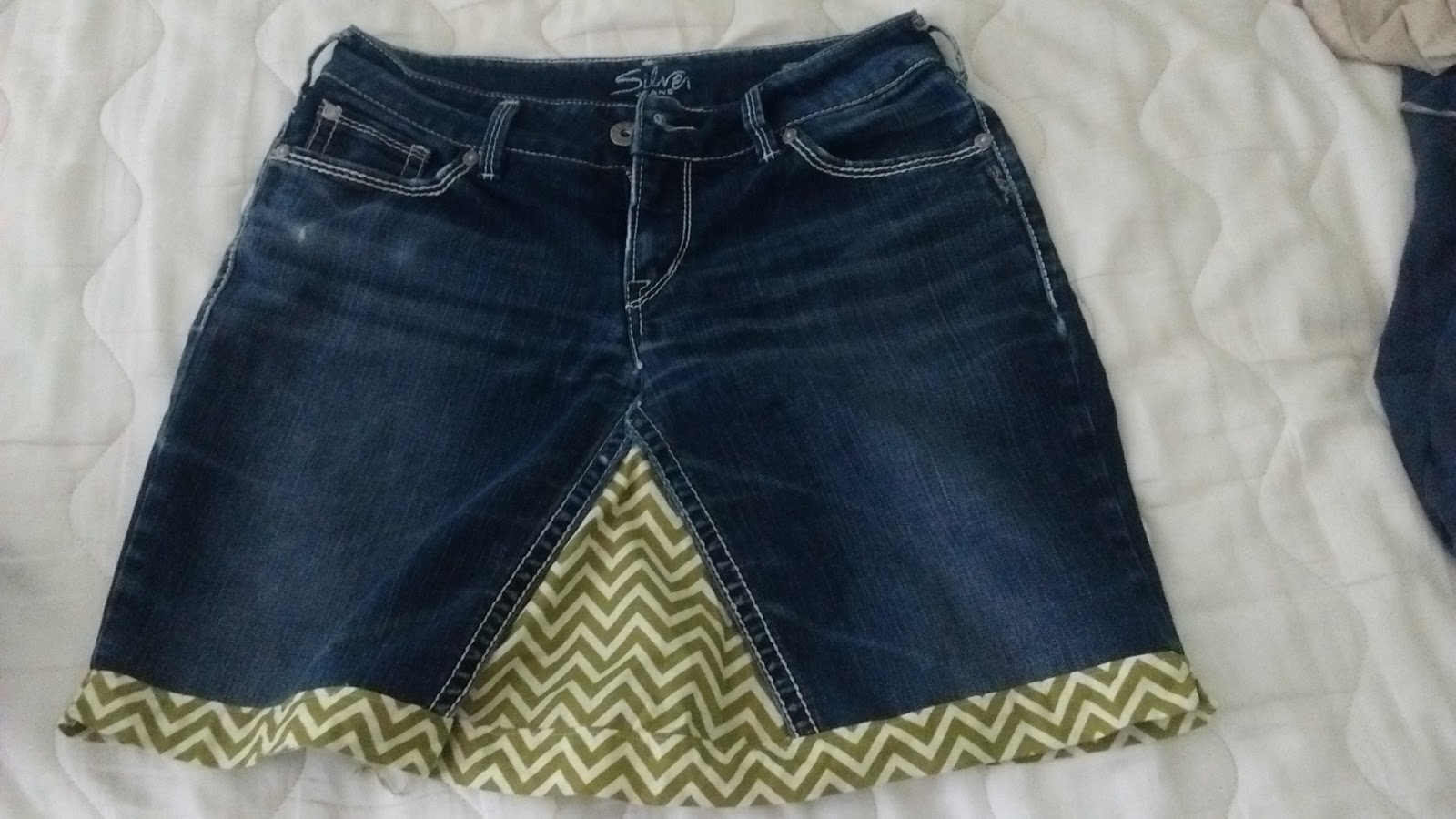
The skirt I made when my favorite pair of jeans died.

Our society, our planet, has a giant waste problem. Frankly, I think we pay far too little for garbage service. The fact that recycling is free in my area shocks me, because it's sort of covering up the fact that even recycling is pretty wasteful. With geopolitical problems right now and problems on the home end, it also might not be free for too much longer. Reusing things so that they never enter the waste stream in the first place can help the goal of zero waste. And if you have a wasteful habit that you really, really love--like a Keurig coffee maker--look for ways to make it less wasteful.


Embracing Difficulty

This is by far the most abstract but probably the most important place where frugality and environmentalism intersect. When you make a conscious choice to embrace either mindset, you must embrace doing the difficult thing. It's easy to throw money at a problem or to drive everywhere. It's not so easy to deny yourself things or walk to the grocery store with two small children. (Ask me how I know.) If a person really wants to stop living paycheck to paycheck, though, they need to embrace the difficult choices and figure out what can be cut from their budget, or what they can do to earn extra money. It's difficult and no one wants to do it, but making a better future for yourself is worth it. The same thing holds true for the environment. We can't keep thinking of ourselves all the time, we need to be looking to the future and trying to make tomorrow better than today. We owe it to ourselves and everyone who comes after us, not to mention every other species on the planet, to build a better and less wasteful society. But we can't do that without first embracing the hard choices.

My brother reminded me that, during the Great Depression, my great-great grandparents* moved out of Missouri to live with their daughter...in her chicken coop. Think of how rough life has to get before living in a chicken coop is better than what you left behind. It makes my philosophy of embracing difficulty seem like a game. But, what they had left behind was an epic environmental disaster, one that could very well happen again if we don't course-correct. Never think you and yours won't be the ones living in chicken coops if you really have to.  Learn to suck it up now, in hopes of averting a chicken coop retirement.


As I said, we're no environmental paragons. We drive. We eat meat. We have kids, for goodness' sake, little resource-intensive needlings. Even trying to do things as environmentally friendly as I have time and energy for with regard to raising kids, they take a lot of resources. (Oh lordy, the amount of laundry with a new baby....) But the kids help me look to the future and clarify why I do the things I do. When I want to take the easy route, all I have to do is look in their little faces and remind myself that it's for them more than it is for me. Everyone has a reason, someone or something to give them hope that we can make the future better. For me, that's my kids.

I don't worry that humans will go extinct because of climate change but I do worry about the wars which will inevitably occur when resources become scarce. (Are occurring?) I worry about how pollution is affecting people right now, particularly the vulnerable brains of children. I worry about the people who have to live near factory farms and oil refineries. I worry about the animals who never asked to ingest plastic that humans created. It's worth embracing just about any difficulty now so that so much suffering and devastation is averted, both short- and long-term.

How many of us say we'd do anything for our kids, but we can't even turn down the heat? Our actions are making liars of us all. I'm striving to be less of a liar every day. It gets easier when you realize that humans are really adaptable. What was once super difficult becomes your new normal, and you can set the bar higher for yourself. If we all set that bar just a little bit higher, and a little bit higher, then we'll collectively be making the future better. The value of small, incremental change is highly overlooked. I can't do it all so why should I try at all? But even small changes can have a big impact over time, particularly when you implement more than one change. It's like the classic example of spending $5 on coffee daily. It's not that $5 is going to break most people's budgets, it's that the value of that money over time really will make an impact on both savings rate and how much a person needs to save before reaching financial independence/retirement. Similarly, doing small things all the time that are better for the environment, especially if you get others to do the same, compound over time to become significant. It won't take the place of political and international action on a massive scale, but it can build momentum so that such critical action seems attainable.


*Family historians, feel free to correct me on who, exactly, this was if I don't have it right.

Saturday, January 13, 2018

Getting ready for baby

Being pregnant may be one of the oddest states a person can ever be in. You are never alone, and you know it. Even if you manage to forget for a time (usually only in the first couple of months), there is always something that pops up to remind you. You realize that you can't do something you used to be able to, or you tire more easily, or you catch a whiff of something that sets your stomach off.

Pregnancy affects everything, absolutely everything. Blood, bones, teeth, eyes, hair, digestion, skin, nails, tendons, muscles, hormones, mind, stamina...everything. Pregnancy is like a science experiment you conduct on yourself, one that changes every time you go through it, and you're fairly confident of the outcome but that's not certain either. A healthy, live baby is only one possible outcome and every pregnant woman who is willfully, joyfully pregnant lives every moment with the knowledge that things might not go right. Miscarriage is far more common than is acknowledged in general society, stillbirths happen, and babies can be born with conditions that range from the mildly inconvenient to the major but fixable to the not fixable but livable to those which mean a child will never live to see adulthood, or even a year. So you hold your breath through the first trimester, waiting for those confirmations that all is well. A strong heartbeat, an ultrasound. You hang onto even the worst symptoms, knowing that they signal all is going along as it should be.

The second trimester brings some relief, both from symptoms and from the fear (since miscarriage is unlikely) but there are fewer overt signals that all is well until, sometime between 16-22 weeks, movement is felt. Fluttery little signals that many first-time moms mistake for gas or hunger pangs. Still, even after movement there is the fetal anatomy scan to be gone through, to check for anomalies. We were far less stressed out about it this time, laughing and joking with the ultrasound tech, but it was still a relief to hear those magic words, "She looks perfect!" I know people who've had a tech quietly leave the room, only to have a doctor enter a short while later to say that all is not well and to discuss options.

Still, for most who reach that point things will be perfectly normal and healthy. Which doesn't mean it's easy. As you grow more confident in your pregnancy, you're also getting bigger and less capable of doing things you usually take for granted. Everyone begins to comment, to question what you're doing. "Are you sure you want to stand on that step-stool?" Your growing belly is evaluated and commented on endlessly. "I bet you're having a boy. You look like you're carrying a boy!" Thanks, stranger on the bus.

The third trimester brings on a slew of new and uncomfortable symptoms. I'm not sure if I'm really more uncomfortable this time than I was last time, or if I've forgotten just how uncomfortable I was during my first pregnancy. Things are definitely different. The only thing that has remained consistent is my rampant heartburn, for which I take safe medication pretty much daily. But while I'm not getting the leg cramps that, last time, woke me screaming out of sleep at least a couple of times a week, I instead feel like my pelvis is being crushed from the inside. Instead of having to change which side I sleep on, in agony because my hips feel like someone was hammering on them while I slept, this time my hands and feet are swelling (edema) more. When people ask how I'm doing I always answer, "Fine," but if I was being honest I would say, "Everything hurts, and I'm tired." One of those things will begin to change for the better when baby is out, which adds to my natural impatience to meet this child.

And the comments get even worse the bigger you get. Last time my least favorite thing to hear was, "Wow, you're huge." As if I didn't know that? This time it's been a range of mildly annoying comments, from the people who tell me I must be having either or a boy or girl, depending entirely on how they perceive I'm carrying this child, to a coworker telling me that I seem to be managing my weight gain well. I'm sure you can imagine how much I wanted to yell at him that it's inappropriate to comment on a coworker's weight that way, pregnant or not. I actually preferred the random woman on the street who muttered that I'm a "whore", because that at least made me laugh. (Still does, when I think about it.) Don't even get me started on the people who randomly touch my belly because they "just can't help themselves". HusbandX pointed out how rapey that excuse is, because in no other circumstances would it be at all okay to touch a stranger's abdomen without their consent. Reminder: being pregnant does not make a woman's belly public property.

We weren't entirely sure we were even going to have a second kid. There was certainty in the beginning. We had a plan, after all, a number of kids we'd agreed on before embarking on the whole project. Then the Munchkin was born and I told my spouse we wouldn't even discuss a second kid until she was at least two. When she turned two, we were jobless and living with my parents. Not exactly a great time to dream up having another kid. And did we even really want another one? I like to joke that our Munchkin is a four parent child. That is, the ideal number of adults to watch after her at any given time is four. As anyone who knows her knows, she's more than a little handful. She's exhausting. Wouldn't a second kid make life that much harder?

We went back and forth. I tried to talk myself out of wanting a second kid so very, very many times. It didn't work, clearly, and we finally agreed (among other reasons) that our kid was the sort of kid who needs a sibling. This last year has also shown us the importance of having siblings. I can't imagine living through my dad's death and taking care of my mother without having my brothers. This is not to say that every kid has to have a sibling, we know and love many only children and respect all the varied reasons their parents have for not having a second kid. But we realized that our sociable daughter would love to be a big sister. And it's true--she's been talking about "the baby sister you're making for me".
A baby shirt my brother and
sister-in-law got for us.

So into all of the chaos of 2017, because we hadn't taken on enough projects, we also need to get ready for this baby. However, the prep is far less onerous than most people make it seem. Just like every other transition in life, our society has deemed this time to be one in which rampant consumerism is necessary. There are endless lists of what you "should" buy for baby, all of which seem to assume that you have an endless amount of money to spend on things your child might use once or twice before they outgrow it or their development makes it unnecessary. To me, this is a mask for what people are really feeling at this time. Despite knowing that we will have a healthy baby, there are still so many unknowns. How will this birth go? What will baby be like? Will she sleep, or will she be like her big sister was and torture us with sleep deprivation and crying whenever she's not in my arms? People cover up this anxiety with actionable items, like decorating a nursery and buying All The Things. This is not to say that you don't need anything for a baby, far from it, but most of it doesn't need to be gathered before a child even enters the world. Clothes, a safe place to sleep, and food are pretty much what a baby really needs. The rest is just stuff to help make things easier for the parents.

With our first we started with the assumption that when we needed to put her down we would do so on a blanket on the floor. She hated that. By the time she was two months old we bought a (used) bouncy seat to put her in so that I could at least go pee without the background of infant screams. $10 very well spent. This time around we're keeping to the same loose plan. We kept much of the stuff from the Munchkin's babyhood, just in case we decided to go ahead and have a second, so we have clothes, baby blankets, books, toys, carriers. We have a bassinet and a crib, a pump and some bottles and a nursing pillow. The only prep for those items was to wash them, since they'd been in storage totes for years in most cases.

What we haven't bought are any of the big things. We sold that bouncy seat when we moved and haven't bought a replacement because who knows if this kid will require one? We haven't bought a swing or exercauser or even a play mat. We haven't bought a monitor. If we decide later on that we need any of these things (and remember, babies have been born and raised for millennia without *needing* these items) then we can always get them after the baby is born. Why stress about it now?

I kept my maternity clothes, so I didn't need to run out and buy all new clothes. When I discovered a lack in my wardrobe I sent out a call to my Buy Nothing Group and one woman offered up some clothes. Not all of them were my style or terribly flattering, but I picked out the pieces I wanted and have been wearing those. I'm getting ready to pass along all of my maternity clothes to a friend who is pregnant with her first, and the ones she doesn't like or want will go to a women's shelter. Why should any of us buy a whole wardrobe for roughly six months? Taken all together I've needed maternity clothes for less than a full year between my two pregnancies, yet it would be easy to spend thousands of dollars on new maternity clothes.

It would be hypocritical to say that I haven't bought anything, or that I haven't bought any new things. I needed new maternity/nursing bras this time and "splurged" by getting three (last time I only had two) as well as a nursing tank top. I bought cloth pads for the postpartum period, since I hated both buying and wearing disposable pads for weeks on end last time. Aside from the expense and the waste, the chafing was real, and who needs to be even more uncomfortable after just having a baby? No one, that's who.

One of the only things bought new for baby herself were some cloth diapers. We've loved using cloth diapers with our first (who is finally growing out of her nighttime need for them, hurray!) and it wasn't even a question of whether or not we would use cloth again. However, the diapers we've been using were hand-me-downs, and they're falling apart. The covers are losing their waterproofing and elasticity, the inserts are falling apart and not terribly absorbent anymore. I made extra inserts out of old towels just to get us through this last little bit of nighttime diaper needs for the Munchkin, but for a baby who will be in diapers full time we needed all new ones. My in-laws generously purchased the ones I wanted as a gift, and they're so cute I'm actually excited to use them.

My biggest preparations haven't been in what we've bought. We've slowly been building up some easy meals in our freezer, from breakfast (baked oatmeal muffins and banana bread muffins) to dinners (soups and these potstickers). I wrote a giant list of freezable foods a while ago, knowing that I would likely only get around to about half of them or even less. But having any wholesome meals in the fridge to help make parenting while sleep-deprived just a tiny bit easier, that's a huge win. Huge.

The other biggest transitions and preparations have been about me. I miss being just me. I'm so happy to be pregnant and to be having another baby, but I miss myself. The last time I got on a bike I would not have been able to get on if it wasn't a step-through, because I can't lift my leg high enough to swing it over a saddle anymore. Then my belly wouldn't fit between the saddle and the water bottle holder. When I finally got up, my balance was so shaky I thought I was just going to fall over. I cannot trust my own body to do the things I'm used to doing. I can't walk for too long because then my feet hurt and begin to swell, which also happens if I sit in a chair for too long. I've spent far too much time on the couch with my feet up, watching Netflix, because I can't do the things I'm used to doing. It's hard. The mental fortitude it's requiring is wearing me down as much as the physical pains are. I am so ready to be done, for this baby to be on the outside. .

Even with that, however, I'm glad to be going through this. Adding a second kid is even more exciting, in many ways, than the first. I get to not only welcome a tiny new person into the world but we get to watch our older child transition into her role as Big Sister. We get to watch the two of them play and interact and grow as siblings. Even knowing that there will be tough moments, I'm looking forward to this. When asked, the Munchkin has told us that she can't wait to hold and hug and kiss her sister. She's complained about the wait (I completely agree) and told us that she's always going to play well with her sister. We've gently explained to her what babies are like and how the baby will affect things for all of us. We've read books about babies and what it's like to bring home a new baby. We know that the reality will involve some hard lessons still, and that there will be some jealousy. However, the fact that she's so excited to be a big sister is confirmation that we made the right choice. No matter what hardships come our way from a newborn baby, it will be so worth it for the whole family.

Saturday, January 6, 2018

House efficiency projects

One of the many and varied reasons we bought a house was to have more control over our living space. This includes, not surprisingly, how efficient we want the house to be. I like efficiency and admire it in basically all forms. Efficiency of movement when someone gets into the flow of their work (think chefs in a kitchen) or time management are really impressive for a reason. I find efficiency in our built environment to be just as awe-inspiring.

In the past we've lived in places which were horribly, horribly inefficient. The dry cabin with thin walls and minimal insulation. Our last apartment in Fairbanks, where we could feel cold air from under the front door. (I made a long rice bag to put by the door to stop the draft, but it shouldn't have been necessary if our landlord had been even halfway smart.) It has been frustrating to know that we couldn't do much about the inefficiencies.

Now, though. Now we can! Such a good feeling.

It has started small. HusbandX set up a cord for me (which can easily be taken down) to line-dry our clothes. I've been doing this for years because it not only saves on electricity costs (massively) but it's also really hard on clothes to put them through a dryer. I don't particularly like shopping, and the clothes I do have I tend to like. Go figure. So, I want to keep them nice for as long as possible. Line drying our clothes is one of the easiest ways to do that. All summer I hung out our clothes (and sheets, and blankets) to dry, which they did remarkably fast. Even through the fall I was still drying our clothes out there, taking advantage of the sunny days to do so.

This doesn't mean that we eschew the dryer entirely, unfortunately. Towels still go in the dryer and the Munchkin's diapers have gone in the dryer. This will change, since we got new diapers for Baby #2 and they line dry amazingly well. Even with the diapers and towels, however, we've been averaging one load in the dryer a week. If I'm washing diapers, I hunt around for any towels that also need to get washed. two loads in the washing machine (one of which is very small) can easily be combined in the dryer.

The one thing I never line-dry outside: our underwear. For everyone's sake. I just hang that up in our rooms on hangers in the closets, or the Munchkin's on the knobs of her dresser so they're easy for her to put away when dry.

We're still trying to come up with a good way to line dry everything inside during the wet winters, something that doesn't take up too much space because, really, who wants to dedicate tons of space to that? I only wash about one load of clothes each week anyway. (Seriously.) We have a few ideas for the laundry room but, since it hasn't been a problem so far, those plans have been held off for a little while as we focus on other things. For now, I'm using a clothes rack and a mostly empty closet down in the office to hang dry our clothes indoors. Sheets can get dried, and rather quickly, over the shower curtain bar in the bathroom.


Next on my list, the city of Seattle has a program for residents to buy compost and yard waste bins. Instead of shipping out our compost, we could do it right here at home! These are a bit cheaper than they would be if purchased elsewhere, and they have instructions for how to make them rat-proof. I ordered two compost bins and a yard waste bin. Then, I reduced the size of the yard waste bin that the city empties and hauls away. (Savings: $6/month.) I was originally going to see if I could get rid of the yard waste barrel entirely until I realized that I still need it for the invasive plants I yank (bindweed and blackberries) and that animal food scraps such as bones can be composted by the city, which they can't/shouldn't be at home.

This decision is only saving us a minimal amount of money per month, but since I garden there will be benefits to it far down the road. I won't have to buy compost for my garden beds, saving me both time and money as well as effort. Having the compost right there means that I don't have to drag bags of it, or carry shovels of it, all around. Having compost in my garden beds also means both less frequent watering and greater nutrition in my produce. Wins all around!


Along with the yard waste barrel, however, I reduced the size of our garbage can. I've been on a mission to reduce all of our waste (both garbage and recycling) for several years. I can't claim to be anywhere near zero waste (bummer) but it has been remarkably easy to make a few small changes that have led to giant reductions in waste. We only generate one small bag of garbage a week so I figured that even when our friend moves into the downstairs apartment and my brother moves into the spare bedroom we still won't be producing all that much garbage. When we moved in here we had a large 64-gallon garbage cart, which alone cost $72.90. Ouch. When I changed the size of the yard waste barrel I also moved us down to the 20 gallon "mini can", which will fit about three garbage bags a week. Our total cost for waste removal is now $33.15 a month, less than half of what garbage alone was costing when we moved in.

Waste rates are also going up around here on April 1st of this year. The more garbage can you need or want, the more your rate will go up. This makes my reduction in garbage bin size even more worthwhile.

I didn't do anything about our recycling can because recycling is free. My only other option was to add a second cart, and we really don't need that.


We started replacing bulbs with LEDs. Any lights that have gone out, and we've actually had a few do so since we moved in, and a few others have been replaced with LEDs because they just weren't good lights. Lights that get the most use have also been replaced with LEDs, and the Christmas lights we bought are all LEDs. With the price having fallen so much (and the automatic rebates Seattle residents get) there is absolutely no reason not to do this.

We also gave the Munchkin a nightlight in her room. One of the outlets has a cover on it which detects when it's dark and an LED turns on automatically. It's dim, but just enough light to take away some of that fear of the dark. She loves it, and we love that we don't have to remember to turn it on and off. Nor can she play with it, which if you know our kid you know she would totally do, so it's not in any way a toy. We're trying to figure out a good place in the hallway to put another light for those midnight bathroom trips or scary dreams that send her racing for our room.


There's a program around here called Trees for Seattle. They give out free trees! The goal in doing this is multifacted: to reduce the heat island effect in Seattle by improving the canopy, to clean the air, to clean the water runoff, and to reduce traffic speeds and noise. I'm sure there are others that I'm forgetting. Mature trees also bump up property prices and, in our case, produce fruit. Yep, we got a free self-pollinating cherry tree. Squee! I'm so excited. Cherries are my favorite fruit (well, they vie for that position with peaches) so having our own source of cherries is pretty much a dream come true. The fact that we didn't even have to pay for this tree rather blows my mind.
My cherry tree!

There is a lifetime limit of six trees per household, so choose wisely. I only asked for the one tree this year because I'm still trying to figure out what I want to do in terms of landscaping. We can make our property even more efficient (in terms of light, heat, water usage, food production, etc.) by implementing good landscaping and trees are a major part of that. This first year, though, to reduce overwhelm I've decided to push most of that off. Besides which, I'd like to know how our house does in all seasons before I make major changes. It would be pretty sad to put a light-loving plant in what turns out to be a shady area most of the year, or a plant that needs dryer conditions in a swampy area of the yard.


I'm embarrassed to admit how long this one has taken us. When we moved into this house it had a leaky faucet in one of the bathrooms. My original plan was just to fix the leak. I even went so far as to buy a kit to fix it, but then we talked more and realized that we hated the faucet anyway. It was cheap, and looked it, and it was old so it was getting gunked up and hard for the Munchkin to use. We decided to just go ahead and replace that faucet, as well as the one in our bathroom. That one doesn't leak, but it does squeak every time we turned the knobs. It's loud enough to wake us up sometimes.

However, making that decision never lead to action. We briefly looked at faucets, priced some out, never came to an agreement about what, exactly, we wanted, and let the whole problem stagnate. So the leak continued, for months. Finally, I got fed up. I went in there with the replacement parts and got all set to do it. Then I realized that not only did I not have the wrench I needed, my brother having taken it, but there was a big lead warning on the side of the replacement parts. Since I'm currently gestating a tiny human, I figured that calling in help was required. I called my brother, who brought over the wrench and the know-how and the strength, and I basically sat back to watch him work. But hey, now I know how to do it!

We also discovered in the course of this work that the hot water does not completely turn off to that sink, so we added one more project to the giant list of to-dos. We also discovered that the bathtub upstairs leaks into the bathroom downstairs. An easy fix with plumber's putty, but yet another issue to work on. I suspect that plumbing will be a frequent issue with our older house going forward.

Thankfully, the previous owners installed a low-flow showerhead in the main bathroom and a dual-flush toilet in the master bathroom. I'm certain we'll find other ways that we can and should reduce our water usage, but having some of them done for us is quite nice.


We got an energy audit. Again, this is free through our utility. Most of what they told us was stuff we already knew: increase or replace the insulation in the attic, check out the elderly fridge to see how much electricity it's using each month. Things like that. However, we found out that there's no insulation in the exterior walls. Fixing that will not only increase the efficiency of our house, it will also make things quieter. I've added that to our incredibly long list of projects we'd like to do.

It was wonderful to have an expert come and assess what was really worthwhile to button up our home for all seasons and weather. He flagged the big-ticket items that would be the most worthwhile and, in many ways, it was nice to see how few there were. Of them, most items were flagged for potential problems down the road. Our furnace is a bit older and he recommended getting it serviced, as well as looking into replacing it sometime in the next five or so years. This will give us time to save up money for the replacement even as we budget for the other upgrades and changes we need to do. The insulation is the biggest priority, naturally, but we also have to balance the resources of time and money so I don't yet know when we'll get around to that. My hope is that at least one of the insulation projects can be done this year. Our utility not only has a list of reliable contractors, but also gives rebates of up to half the cost. Yay!


In the midst of all these things, we've been dealing with lots of other projects too. We finished painting upstairs, for one. (Huge thanks here to a friend who helped us the whole way through.) HusbandX and a friend replaced the garbage disposal, for another. It hadn't worked since we moved in and, at the end of summer, we got a massive fruit fly infestation that we realized was coming from the drain, where food particles had gotten stuck. Ew. They searched online for parts but the old disposal was so old that no one sold any of the needed parts anymore, so replacement it was.

HusbandX cleared the most-likely-asbestos-filled popcorn off the ceiling downstairs. It was easier work than he'd expected, at least the actual scraping, but still a major hassle. He wore safety gear and had to thoroughly clean everything down there all by himself. Nasty work. Then he had to texture and paint the ceiling (again, our friend came to help with the painting) so it was quite the project.

HusbandX, his dad, and his brother built us a kitchen island. It massively increased the amount of usable counter space and storage we have in our kitchen, and is far cheaper than remodeling. Since we don't have any sort of a pantry, this extra storage space is allowing us to get many things off the counter which otherwise didn't have a home. It also has a cabinet dedicated to all of our kitchen towels and rags, complete with a laundry basket for the used and dirty ones, which is so handy.

We discovered one night that a sink downstairs was clogged and almost overflowing. It was quite obviously connected to our kitchen sink, because there were food particles from what we'd put through the garbage disposal floating around. We tried plunging it and using drain-clearing chemicals but neither worked so, for the first time ever, HusbandX got to snake a drain. Drain snakes can be rented and are far cheaper than hiring a plumber, which would have been our last resort if the snake hadn't worked. Thankfully it did, because I was dreading having to find a reliable plumber. This was also the same night our child decided, while we were busy trying to figure out the sink issue, to put an entire roll of toilet paper and a book into her bath. It was quite the night.

This has all happened, of course, around jobs and family obligations and illness and holidays and whatnot. And, it's been happening while I'm increasingly ungainly, unable to help, and tired. The bulk of the credit goes to my spouse, then to our families (particularly my middle brother) and friends for helping out. I get, at best, mild credit for figuring out what rebates are available to us and doing the very lightest of work. I mean, I can still change a lightbulb.

And we still have a long way to go, in terms of making our house actually efficient. There are smart power strips that we can get through our utility for $10 each, rather than the retail cost of between $70-$80. Those should save a fair amount on electricity costs, since they can be used on entertainment centers and, I think, on computers. They monitor the devices to see if they're actually in use and turn them off if not.

We'd also like to get either a programmable or smart thermostat. This will cut down on some of the arguing over what temperature to set the house at. Despite the reputation women have for always being cold, I often find that it's women who want the house's temperature lower. HusbandX wants to be comfortable wearing shorts inside the house year-round and I want to be able to wear my sweaters. He also hates getting out of bed when it's cold and I don't mind so much. A programmable thermostat would mean that we wouldn't have to keep turning it up or down depending on who's home and what time of day. Several brands of smart thermostat are reduced in price through our utility, so those are worth looking into. We just haven't taken the plunge to actually buy one yet.

Another efficient use of our land is for food production. My spouse has completely nixed the idea of backyard chickens (boo!!) but plants are a go. We just don't know yet where we want to put them. We already have some strawberry plants, but we need to order and plant some raspberries and blueberries. The raspberries have a particular space earmarked for them, one that's decently well contained so we wouldn't have to worry about them spreading and taking over, but it will require removing some other shrubs (that we don't like anyway). Hopefully by the time planting season comes around I will be sufficiently recovered from childbirth that I can do a fair bit of the work.

There are further things that we want to implement but won't get to any time soon. Rain barrels, but we need a new roof first. (Sometime in the next five years.) We want to put solar on our house, and will probably start small by just putting a few solar panels on our shed, which faces south and gets good light all day long, even in winter. The house will have to wait because, even if it will save us money in the long run, the initial outlay of funds is not something we're prepared to do right now. Instead, we're focusing first on what we can do to reduce our consumption of heat, electricity, and other resources. That will not only help make eventual solar more worthwhile (selling extra to the utility company is even better the more extra you have) but will also help bring forward the day when we can afford to go solar. That is truly efficient.